click to enlarge

My friend is selling her house, but she won’t get a reasonable price
because of the
junk yard maintained by her next-door neighbor. It’s a
conflict reflecting a central tension of our times.
Mrs. Juncky, the lady next-door, has a corner house in a nice
neighborhood. In front, on the side, and behind her home are expired
lawn mowers, a disused boiler, a variety of abandoned planters and
plastic containers, an assortment of rusted hoes, rakes and shovels,
stacks of rotting wood, decrepit lawn furniture, several orphaned
interior doors, and an odd collection of windows and window screens.
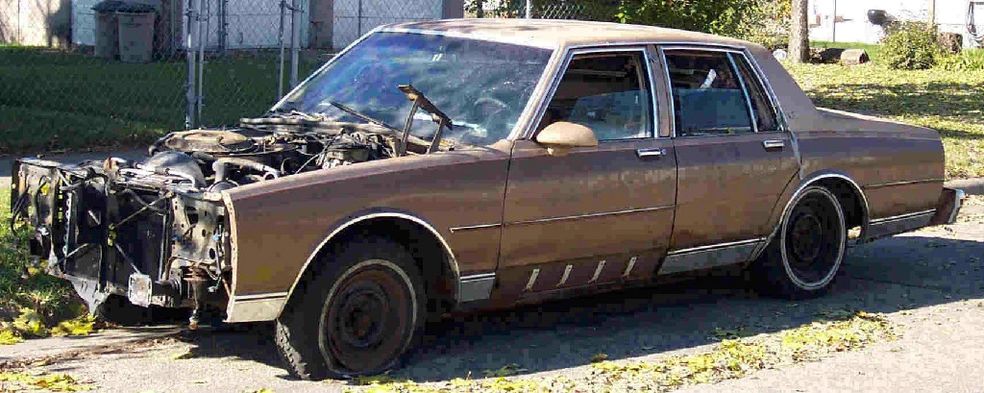
Missing are the abandoned pickup and broken-down RV needed to complete
her collection of junk.
Representatives of the neighborhood association were unsuccessful in
appealing to her sense of pride or responsibility to the neighbors
because there were no covenants. A city worker could not persuade her to
conform to the reasonable expectations of the local code, but no action
was taken because she broke no law.
When asked by my friend about this situation, Mrs. Juncky said, “It’s my property; I’ll do what I want to with it.”
The real estate example is obvious. We have zoning laws, construction
codes, rules about weights and measures and a host of regulations that
constrain individual liberties which may harm the interests of others.
In some places, the freedom to paint your house whatever color you wish
is limited by a home-owners’ agreement or covenant. Some developments
insist that all structures have Spanish-style tiles roofs.
Tourists often find such constraints charming and quaint … as long as
they don’t have to live with them. Historic preservation may be invoked
to support conformity and suppress individual preferences. But the
issue goes way beyond the maintenance of residential or commercial
property.
This is the standoff between the property owner who rents land to the
billboard companies for signs others see as polluting our highways and
endangering our lives.
This is the ongoing battle between tax-cutters who believe “life is
tough and people need to be responsible for themselves,” and their
opponents who cannot justify slashing people from the roles of the
disabled, indigent and unemployed.
This is America’s unresolved question of individual rights of gun
ownership and the community’s reasonable expectations of safety in our
homes and on our streets.
This is the issue between the parent who refuses to vaccinate a child
and the well-being of thousands of other people’s children.
This is the conflict between the rights of the individual and the negative impact they have on the lives of others.
Mrs. Juncky may be within her rights; her junk does not emit bad
odors or attract vermin. Her yard is just unsightly. Since we insist on
believing “beauty is in the eye of the beholder,” the visual wounds Mrs.
Juncky inflicts are easily dismissed.
While Mrs. Juncky asserts her rights, she remains indifferent to the
monetary harm to another. Surely the two could negotiate a solution, but
not as long as Mrs. Juncky insists on “holding her ground.”
Mr. Marcus is an economist, writer, and speaker who may be reached at mortonjmarcus@yahoo.com.


 like
like dislike

